
No products in the cart.
Return To Shop
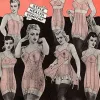
The Golden Age of Girdles 1930s – 1960s
“Summary: This guide details the mechanical evolution of the girdle from 1930 to 1960, including the technical differences between open-bottom and panty-girdle constructions.”
The 1930’s Girdle
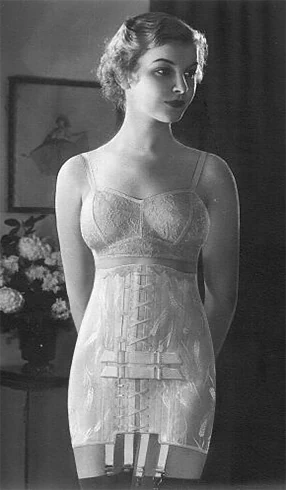
1930s girdles replaced the rigid, heavily boned corsets of previous eras and tended to feature angled seams, hidden boning, and side hook-and-eye fastenings. Materials like cotton twill, linen, cotton twill tape, and various elastic fabrics were used, sometimes still with the steel boning of the previous period.
The evolution from rigid corsets to more flexible girdles, often incorporating elasticated panels and built-in bras, was key to achieving the elongated, natural silhouette of the 1930s. This new style was worn mainly by slimmer women, while all-in-ones or corsets continued to be used by ‘plus size’ women.
The pivotal role of Lastex and Rayon in defining early 1930s girdles, with their emphasis on “two-way stretch” and “beautiful new finish” illustrates how new technologies can enable entirely new fashion silhouettes. Nylon began making its way into girdles and corsetry at the end of the decade.
A key modern advancement was the integration of “invisible zipper closures,” which further enhanced the garment’s sleekness and seamless appearance beneath clothing. Despite the fact that they were not as constrictive as corsets, they still provided abdominal support, especially for women in demanding jobs during the war effort later in the decade.
With the onset of the war in 1939, metal and rubber were less available leading to limitations on steel boning and hook-and-eye closures. This often resulted in a temporary shift towards less luxurious fabrics and the reintroduction of lace-up fastenings for undergarments.
The 1940’s Girdle
Introducing the ‘Golden Age of the Girdle‘
When you think of 1940s – 1950s fashion, chances are it conjures up images of cinched waists in pencil skirts, tea dresses or circle skirts – and structured elegance. But underneath those perfectly tailored outfits was a secret weapon: the girdle.
The glamorous film stars of this period – Ingrid Bergman in Casablanca 1942, Vivien Leigh in Gone with the Wind 1940…. and then Jane Russell, Marylin Monroe, Jayne Mansfield and so many other ‘bombshells’ in this Golden Age of Hollywood, all had tiny waists and great boobs, inspiring women to try and look like them.
The 1940s saw girdles continue on from the 30’s to be a significant foundation garment, adapting to the era’s unique demands, particularly those imposed by wartime rationing.
While their production methods shifted, their core purpose of shaping and posture improvement remained central, especially during long working hours when wartime and post-war women were active.
Girdles were primarily designed to be functional and smoothing, aiming to create a streamlined silhouette with a subtle waist indentation and were typically constructed from rayon or cotton, incorporating a small amount of elastic to provide some stretch.
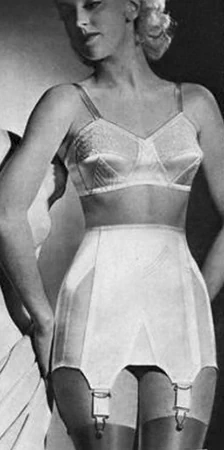
They commonly featured elastic panels on the front and back, with the remaining fabric being more rigid. With some fabrics still restricted in the early 40’s many styles contained less fabric altogether than those of the 30’s – with girdles now sitting just above the waist (as opposed to under the bust).
Fuller-figured women still chose a corset or corselette (All-in-Ones) for more substantial shaping and smoothing. These heavier garments, frequently steel-boned and made from robust materials, combined a full bra, girdle, and hip coverage to achieve a perfectly smooth silhouette. They were however considered old-fashioned and associated with restrictive Victorian shapewear, which 1940s women generally sought to avoid.
And let’s not forget: a good girdle was a sign of polish and pride in one’s appearance.
The 1950s Girdle – The Golden Age Continues
By the 1950s, girdles remained an essential garment for most women, often marketed with claims of “comfort” and “magic” due to the new advanced materials available.
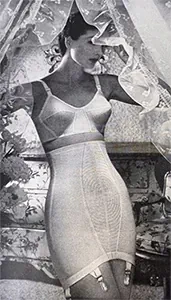
In stark contrast to the previous decade, the 1950s heralded a dramatic aesthetic transformation with styles championing the exaggerated hourglass figure that we all associate with that decade – a dramatically cinched waist, a full often accentuated bust, and voluminous wide full skirts.
To achieve that look, girdles became more ‘aggressive’ and specialized in their shaping capabilities. This post-war ideal celebrated a return to femininity, glamour, and luxury after years of wartime rationing and austerity.
Extensive use of elastic; pioneering of Latex (e.g., Playtex Fabricon blend of cotton and latex); lighter nylons, fishnet, mesh for breathability; advanced synthetics for robust shaping.
Strategic boning (spiral and flat steel) for targeted, dramatic shaping, especially for fuller figures; longline bras with boned support to waist.
Zips at the back or side and suspender straps (2-6) for stockings with hook-and-eye closures.
They typically covered the waist, hips, and upper thighs, and included built-in suspenders (garters) to hold up stockings – a must-have in the pre-tights era.
Women often bound themselves in tight girdles and layers of petticoats enduring discomfort and heat, driven by the social expectation to achieve the perfect silhouette – very similar to how young girls can feel ‘social pressure’ now when scrolling through their Instagram feeds.
Types of Girdles in the 40s & 50s
The girdle was an essential undergarment in the 40s & 50s, designed to smooth and shape the lower body. Unlike corsets, which compress the waist dramatically, girdles were more about gentle control—offering structure while still allowing movement. Think of them as the original shapewear!
There isn’t a one-style-fits-all when it comes to vintage girdles. Here’s a quick guide:
- Open Bottom Girdle: The most classic 1940s style. It looks like a high-waisted mini skirt with garter clips. Worn with a bra or corselet on top.
- Longline Girdle: Extends to the mid-thigh for extra shaping. Great for smoothing the entire lower body.
- Panty Girdle (emerged late 40s): A more modern-looking version that were more like ‘big knickers’ or shorts, usually with suspender / garter straps.
- All-in-one – a corselette which included the bra and full figure shaping down to the thigh.
- Full Leg Girdles: Some variations continued down the leg into a skirt-like shape, fully covering the bottom. These included four elastic straps with metal clips to attach stockings.
The Differences Between Open-Bottom Girdles & Panty Girdles
To achieve the smooth retro silhouette of the mid-century era, you would have chosen between these two primary mechanical designs.
| Features | Longline (open bottom) Girdles | Panty Girdles |
| Mechanical Design | A tube-like garment with no fabric between the legs | Includes a crotch piece, similar to high-waisted briefs, although can be ‘open-crotch’ or feature opening gusset. |
| Stocking Security | Maximum. Usually featured 4-6 heavy-duty suspender straps. | Standard. Features clips, but may shift if the crotch fit is loose. |
| Best for… | Full skirts, swing dresses, and maximum “thigh-smoothing.” | Pencil skirts, trousers, and active movement such as dancing. |
| Toilet Access | Can be fiddly, best option is to unclip stockings and roll up from the bottom. | Generally requires pulling down unless it features an “open gusset” or a hook-and-eye opening at the crotch |
| Historical Vibe | The classic 1940s/early 50s foundation. | The late 40’s, through to the early 1960s shift toward convenience and freedom. |
Not all retro silhouettes are created equal. Use the logic-based Swanky Pins Guide Guide to find the foundation garment that matches your wardrobe and lifestyle.
1. What is your primary style goal?
- A: A smooth, classic line for daily wear.
- B: Dramatic hourglass shaping with a nipped-in waist.
- C: Authenticity for 1940s or 1950s reenactment/costume.
2. What type of clothing will you wear on top?
- A: Modern trousers or jeans.
- B: A tight-fitting pencil skirt or “wiggle” dress.
- C: A full-skirted 1950s swing dress.
3. What is your “Comfort vs. Compression” preference?
- A: Light support (flexible enough for all-day active movement).
- B: Firm control (I want to feel ‘held in’ and secure).
- C: Maximum rigidity (Historical accuracy over modern stretch).
Your Girdle Results:
| If you answered…. | Your Best Match is …. | Why? |
| Mostly A’s | Panty Girdle | Provides a seamless transition under trousers while offering tummy control and high-waist smoothing without the bulk of separate layers. |
| Mostly B’s | High Waist Longline Girdle | Extends from just under the bust to the mid-thigh. It prevents “waist roll” and creates the smoothest possible line under form-fitting pencil skirts. |
| Mostly C’s | Open Bottom Girdle (Metal Clips) | The gold standard for vintage purists. It allows for historical accuracy and the use of authentic, non-stretch nylon stockings. |
The Decline of the Girdle – the 1960s.
The 60’s are known for embracing new, more liberating styles, such as the miniskirt – but did women still wear girdles and what were they like?
Contrary to a widespread belief, girdles did not abruptly disappear from women’s wardrobes in the 1960s and remained essential garments for many women.
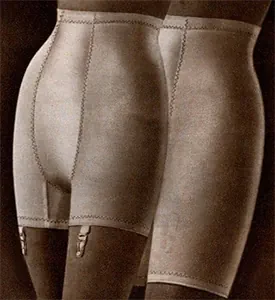
The traditional longer model girdles became less practical and suitable for the emerging fashion styles, particularly the increasingly popular shorter skirts. The most transformative material to impact underwear was Spandex (also known as Lycra), invented in 1959. Its properties—including affordability, durability, and exceptional stretch—revolutionized the industry.
By the 1960s, spandex was integrated into various undergarments, making them “more lightweight and comfortable while offering the same compressing effect” as the older style more rigid garments.
There were more ‘pull-on’ styles, eliminating the need zips and hook & eye fastenings used in the previous decade (although some were still lightly boned) with a focus on comfort.
Sales figures indicate that girdles and garter belts actually experienced an annual increase throughout the 1960s, peaking in 1968 which is surprising. The decline in the late 60’s was partly due to the Miss America demonstrations where they were labeled “instruments of female torture” which gradually saw a movement away from the firmer, more restrictive “flat-tummy look” that characterized the 50s.
In America, the 1960s became “the decade of the panty-girdle,” but in Britain this occurred much later with British women tending to transition directly from traditional girdles to wearing no lower foundation wear at all.
The eventual decline of the girdle, which had been worn in one form or another for decades was due to several factors: looser clothing styles & rising hemlines, the invention of tights / pantyhose and the pursuit of ‘personal comfort and freedom of movement’.
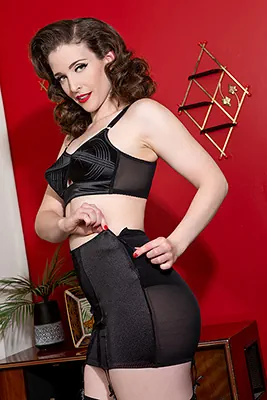
There are still enthusiasts and supporters of the girdle today with many women (and men) wearing them daily.
If you’re building a vintage-inspired wardrobe or simply curious about how to create that flawless retro silhouette, this guide will show you how to wear a vintage or vintage style girdle with confidence—and comfort.
There are benefits to this – your posture will improve 100% by wearing a high waist girdle (preferably one with boning), as it will give stomach and back support.
It can take some getting used to, so allow yourself time to adjust by choosing an initial size that fits perfectly. You may find over time that you want to go tighter or feel more ‘restricted’, so try a smaller size next time.
Some of our customers actually find wearing a girdle addictive, and many wear them all day for shaping, support and the confidence boost it gives them.
How to Fit & Wear a Vintage Girdle: Step-by-Step
- Preparation (The “Sizing” Logic): Unlike modern shapewear, vintage-style girdles rely on fabric tension rather than just high-stretch spandex.
Girdles should be snug but not painful. You want shaping, not restriction. Always check size charts—vintage-inspired lingerie often runs smaller than high-street brands.
* Measure your Natural Waist (narrowest part) and Full Hip (widest part). If you are between sizes, always size up; a girdle that is too small will “roll” at the waist. - Step Into It, Don’t Pull Overhead
The “Step-In” Method: Never pull a girdle over your head. This can damage the internal boning and overstretch the power-mesh. Step into the garment and shimmy it up over the hips, using the palms of your hands (not fingertips) to avoid snagging the fabric. - Positioning the “Anchor”: A high-waist girdle should sit approximately 1–2 inches above your natural waistline to provide lumbar support and prevent the “muffin-top” effect.
- Attach Your Stockings
Technical Tip: Fasten the front suspender clips first to anchor the girdle, then the side and back clips. This ensures the girdle doesn’t shift “off-center” during the day. Always attach your stockings while standing. Make sure the seam (if any) is straight and centered. - The “Sit Test”: Once fastened, sit down. If the girdle “digs” into your ribs or the stocking clips feel too tight, adjust the strap length. A technical fit should provide 360-degree compression without restricting deep breathing.
- Final Adjustments for Comfort
Sit down, move around—ensure nothing pinches or rides up. A well-fitted girdle should feel secure but allow you to breathe and bend. - Layer Your Clothing On Top
Now that your foundation is in place, finish the look with a vintage-style dress or skirt. You’ll instantly see a difference in silhouette and posture.
Pro Tip on “Rolling”: If your girdle rolls down at the waist, it is almost always due to a size that is too small at the hip. When the hip fabric is over-stretched, it “borrows” fabric from the waist, pulling it down. For a technical fit, always prioritize your hip measurement when selecting a girdle.
Styling Tips: Making the Girdle Modern
Wearing a girdle today doesn’t mean you have to go full retro (unless you want to!).
- Pair with a bullet bra for the ultimate 40s/50s lingerie set
- Try it under a modern fitted dress for a subtle vintage twist
- Use it for pin-up shoots, burlesque, or costuming
- Layer it for confidence—many wear vintage shapewear just to feel supported and shaped
Where to Find Authentic-Looking Girdles
True originals are much less easy to find now, can be really quite expensive and difficult to find your size, but there are places out there such as Etsy or even Ebay.
In the mid 70’s when I first got involved in the 50s Rock n Roll ‘scene’ it was so easy and very cheap to buy authentic dresses, lingerie – well everything. We used to frequent Greenwich market (when it used to be more of an antique market before it moved across the road and became more ‘touristy’) and the fabulous Kensington Market which was packed with stalls selling antiques, clothing and accessories covering all era’s as far back as Victorian times. It’s really quite sad that those places have disappeared.
At Swanky Pins, we design our girdles to stay true to vintage silhouettes while ensuring comfort for modern wearers. You’ll find:
- Classic open-bottom girdles with 4–6 suspenders
- Stretch satin and powermesh fabrics for shaping
- Traditional metal clasps and vintage detailing
- UK sizes (and exact waist measurements in inches and cm) designed for real women’s bodies
Explore our collection of Vintage Style Girdles & Panty Girdles
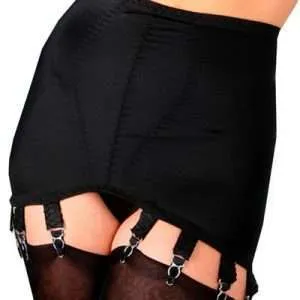
12 or 14 Strap Suspender Girdle in Black, Vintage Style
Price range: £43.99 through £45.99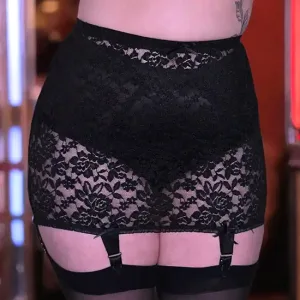
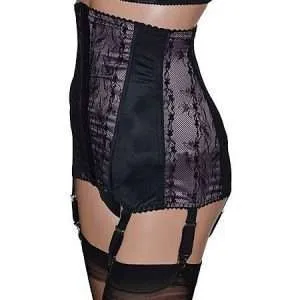
Black Lace Open Bottom Girdle with 6 Suspender Straps
£29.99High Waist Vintage Style Girdle with 6 Suspender Straps
Original price was: £36.95.£31.55Current price is: £31.55.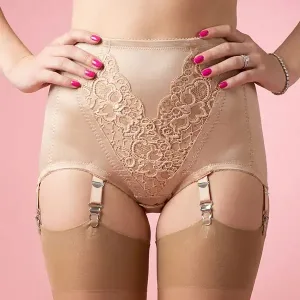
Vintage Style Beige Panty Girdle with 6 Suspenders
£36.99
Vintage Girdle Care Tips
Original Vintage lingerie is made to last—but it needs a little love:
- Always hand wash in lukewarm water
- Avoid harsh detergents or wringing
- Hang or lay flat to dry, reshaping while damp
Final Thoughts
Girdles made between the 1930s – 1960s changed considerably from the style and function to the materials used to make them. Wearing a girdle isn’t just about shaping your body—it’s about stepping into a legacy of femininity, function, and fashion. Whether you’re going full vintage or just want a smoother silhouette with old-school flair, the girdle is a timeless piece worth rediscovering. There are some great examples of underwear worn during these decades at the Underpinnings Museum where you can filter your search to whichever years you are interested in.
At Swanky Pins, we believe in embracing one of the most flattering styles of the 20th century with confidence and comfort. So cinch, clip, and strut—you’re channeling the golden age of the vintage girdle with every step.
More info on Girdles:
The Girdles of the 30’s in Depth Guide >>
Wearing a Vintage Girdle >>
Differences between a 1940s and 1950s Girdles
Complete your silhouette with our Ultimate Guide to Bullet Bras


About author

Related posts
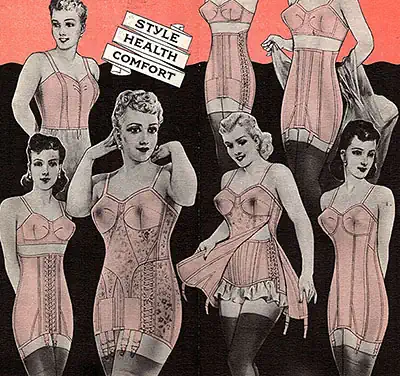
Introduction: The 1930’s Girdle The 1930s marked a profound transformation in women’s fashion, signaling a departure from the slender, boyish “flapper” aesthetic that characterized the... Continue reading
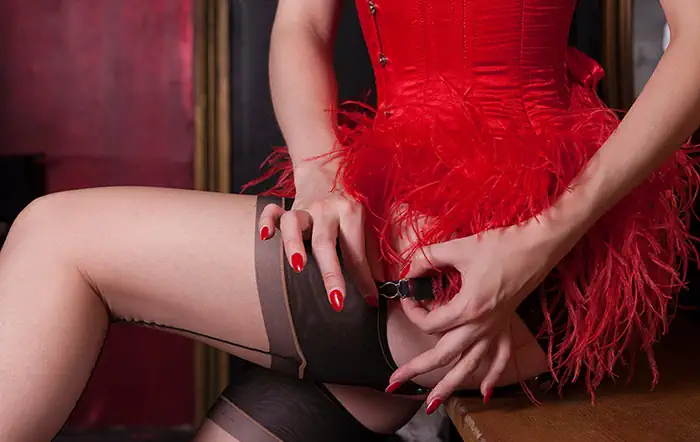
When it comes to vintage-inspired lingerie, few garments cause as much confusion as the basque, the corset, and the corselette. These structured undergarments all shape... Continue reading
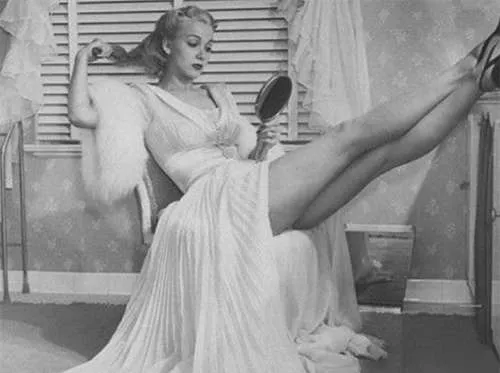
“Summary: Looking for vintage style sleepwear inspiration? This guide examines the key differences between 1940s and 1950s women’s loungewear. Learn about the transition from 1940s... Continue reading
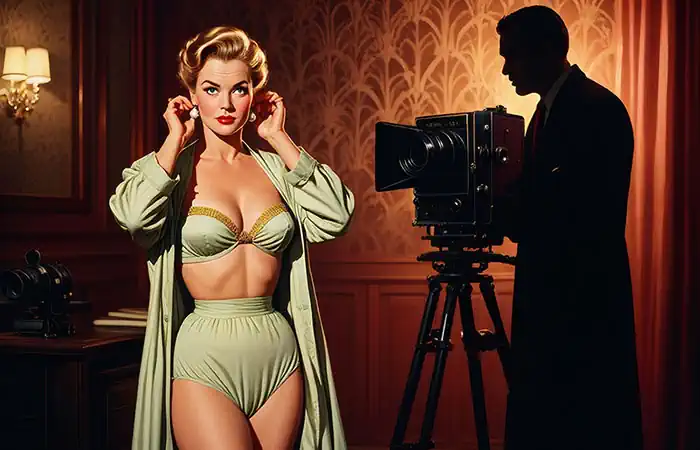
The Hourglass Silhouette At the heart of 1950s lingerie was the desire to sculpt the perfect hourglass figure. Christian Dior’s famous “New Look” of 1947... Continue reading
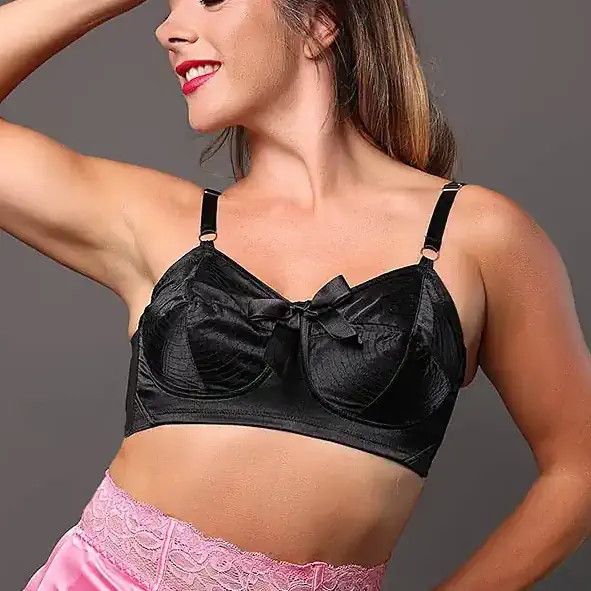
At Swanky Pins, we love the bullet bra – if there’s one piece of vintage lingerie that truly captures the essence of 1950s glamour, it’s... Continue reading



Add comment